We Are the Resources
In Spring 2026, the University of Dayton Human Rights Center hosted its 7th Social Practice of Human Rights conference on the theme of “Creative Resistance.” In this spirit, and with support from the Foundation for Systemic Change, we dedicated time for an intimate, closed-door workshop and convened leaders for a participatory workshop to interrogate the past, take stock of the present, and envision an effort to build a new human rights movement in the United States.
Organizers, educators, students, lawyers, and advocates visited from east coast centers, southern beacons, midwest outposts, and the borderland for an open and critical conversation. Folks came from multiple points of entry into movement work, a mix of elders and newcomers, and from various degrees of immersion in “human rights” as such. We coalesced around a shared idea to build honest, inclusive, accessible mass movements for human dignity and equality; collectively oriented and eyes-wide-open to the realities we confront.
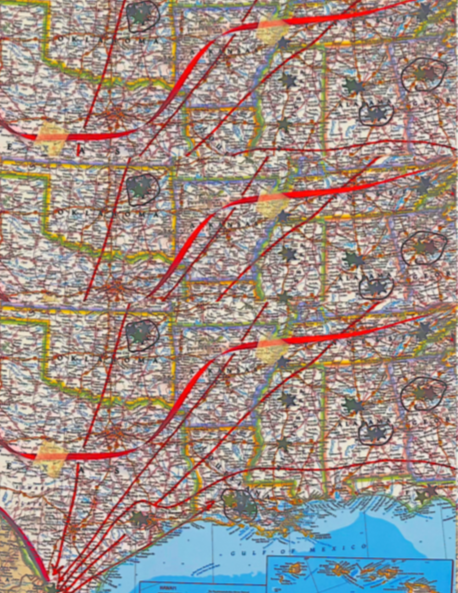
In the opening session, we conducted an ecosystem asset mapping activity responding to the prompts: Where is human rights work happening in the United States today? Where is human rights powerful? Teams poured over maps splayed out on tables set with arts and crafts supplies to plot actors and agents of change; physical spaces and built infrastructure; sites of victory and sites of struggle; cultural knowledge, history, and ideas; and material resources. With metallic star stickers, these categories manifested as visual artifacts of the US human rights movement but the green stars - material resources - were scarcest. One participant stood up in the back of the room and declared, “These maps should have green stars everywhere. We are the resources!”
We engaged in critical self-reflection of past approaches to human rights practice in the US by exploring and exploding core tensions and contradictions to reveal new insights: Non-governmental organizations are not and cannot be the movement, though they have a role to play. Philanthropic support is welcome as alternative economic models take shape. Sharing, coordination, and redistribution among and across formations can reduce competition and improve collaboration. In order to discover the radical, transformative possibility of decolonial and intersectional modes of leadership, it is crucial that we dismantle hierarchies within. Our organizations and movements are too white, too male, too enabled, too rich, and too straight. We are called to upend and recreate our internal structures to mirror the world we want to see: Democratic, courageous, and committed to repairing past harms.
We are the resources. We are determined to keep building a powerful human rights movement composed of people working together in a beautiful, wild, beloved community around basic principles common to all. Human rights struggles happen everywhere ordinary people fight together to protect and promote dignity in their communities, at work, and before their governments. Insisting on the internationalism of human rights can feature heavily as a force for democracy that recasts US national identity beyond exceptionalism and supremacy–as a political society embedded in the global system, subject to laws and norms, and committed to making a meaningful contribution to human flourishing and communal solidarity.